Showing posts with label Zanzibar. Show all posts

Thursday, January 8, 2026

The 1964 Zanzibar Revolution - from my old scrapbook

The revolution in Zanzibar took place on 12 January 1964 and changed the country for ever. We were living there, I was 16 years old, and my father, Mervyn Smithyman OBE, was working for the newly independent country and its elected government as the Permanent Secretary to the Prime Minister, Mohd. Shamte.

My family collected the news clippings of the period, and we put them into a scrapbook. 

It is now 62 years since those violent days. Recently, I came across my old scrapbook and decided to post these pages online for those Zanzibaris and others who might be interested. After all, they record historic events. 1964 was a turning point in the history of the islands: many died, many lost everything and many left the country when possible.

There are many pages, so I will put them into a series of posts. The pages are not necessarily in the sequence of events. 


more to follow ... let me know if you find these of interest!


Sunday, March 19, 2023

A visit to my Homeland – Zanzibar


A visit to my Homeland – Zanzibar 

… and a Meditation on ABUNDANCE (Part 2)

By Bhadra Vadgama. 


We spent a day visiting Jozani Forest, a place I had never visited before.

It was exciting to see the Zanzibar Red Colobus monkey, Procolobus kirkii close up. Its population count is about 1000. It is a rainforest species (unlike the black-and-white colobus found in other regions of Africa), is also known as Kirk’s red colobus, named after Sir John Kirk, the British Resident of Zanzibar who had first brought it to the attention of zoological science.

However, what was even more impressive was the thick mangrove plantation.

Visit this site to see the monkeys and the mangrove forest.

https://www.tripadvisor.co.uk/Attraction_Review-g482884-d4885862-Reviews-Jozani_Chwaka_Bay_National_Park-Zanzibar_Island_Zanzibar_Archipelago.html


Matemwe Beach

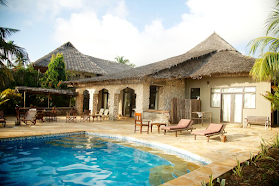
We then spent two days on Matemwe Beach, on the northeast coast of the Island and stayed in Tamani Villas. Check their site 


tamanifoundation.org

We chose this place because Tamani was founded on a deep passion for education, and the desire for giving back to the local community. The founders, Shabbir & Fatema Somji, having successfully sent all their kids to college, decided the time was ripe to fulfil their dream of one day opening their own school that would serve the locals of Tanzania. My nephew is one of the trustees, and with his recommendation and our interest in education we decided to stay there and perhaps spend a day in the school. They run nursery and primary schools and a computer centre.

Unfortunately, it was the midterm holiday break: the school was closed. However, we were able to meet Zahra Panjwani, a British Ithnashari lady who is the head of the Academy and she took us around to show us the campus. She explained to us the difficulties she faced being in a village where electricity was erratic and there was a lack of funds to buy necessary equipment for the Academy. Watch this video to see the marvellous job a young lady is doing. Here is what she said about her post:

“Currently, I am the Academic Manager at Tamani Foundation, responsible for the operation and running of the whole school from nursery up to primary. I have a wide and diverse range of responsibilities, including managing and training the teachers(including providing training programmes for teachers abroad), teaching students and adults, organising key events, interviewing prospective teachers, observing teachers and providing CPD, providing support systems and meeting with parents and parents committee, linking with other foundations and schools, involvement with education inspections, developing curriculums and ultimately raising the standard of teaching and learning throughout the school.”


Watch the video https://m.youtube.com/watch?v=18KKPxlhmcY

They need volunteers, so why not offer a few weeks if you have time to spare?

Because of the holiday time, there were many students hanging around the beach, and we were lucky to record a song in Kiswahili sung by two young girls. Later on, we met some boys who were revising science in a group out in the open. We had a pleasant chat with them, and I ended up drawing a map in the sand to explain to them the geographical position of Zanzibar. Great fun it was. We talked to local Masaaiis; I even joined in their jumping dance on the beach.

One experience was exceptional - at no point we felt unsafe. We followed a local man who, at our request, was trying to take us to a spot from where we could watch the sunset! You would know how quickly it gets dark in the Tropics once the sun has set. And yet here were following a total stranger as if he was a friend.

There was still a lot ‘Abundance’ for me to collect. We met an interesting Asian lady from Zambia we befriended one evening while we went for a meal in the nearby hotel.

We had a good rapport with our taxi driver, who loved Bollywood songs. I ended up explaining the meaning of some of his favourites. It also meant I could listen to Indian music while travelling at a snail’s speed of less than 30 mph on fairly good roads. It was delightful to hear about his young wife and son.

Once back in Stone Town, we decided to stay at the Mizingani hotel on the seafront, not far from where we were to board the ferry back to Daressalaam. The hotel had beautiful old furniture. The bed next to the swimming pool is a typical four-poster bed found in Gujarati havelis in India and must have been made by a Gurjar Suthar. You can see it in the site below:

https://www.mizinganiseafront.co.tz/

Also, in the video, you can see the state of our secondary girls’ school.

We took a stroll around the Forodhani, and although we enjoyed a drink of fresh sugarcane juice, we refrained from eating the variety of fresh seafood, meat and vegetarian dishes cooked by locals on their small portable ‘stalls’ as not only did it all look confusing but also the flies hovering over the food didn’t appeal to us.

If you put Forodhani Gardens Zanzibar and looked at the images, you will get an idea of the variety of foods offered and the buzz of the tourists in the evening.

Throughout our stay in the town, we noticed groups of tourists, escorted by a local young tour guide. We had an opportunity to talk to one who spoke French, which he had studied at Zanzibar University. He found conversation with us fascinating as we had first-hand knowledge of some of the sites near the Forodhani, like the Beit-el-Ajaib, the Portuguese Fort, Princess Margaret Jetty and Euan Smith Madressa School. He laughed and said, ‘You know so much more than me. I sometimes just make up things for the tourists!’ I even advised him on how to promote his trade.

We found a pure vegetarian Gujarati restaurant for our evening meal, and once again I ended up teaching the African waitress how to greet customers in Gujarati, ‘Kem chho? Aavo. Khavanun saras chhe.’

We had the whole morning to roam around the town as we were catching a late afternoon ferry. We walked through the main road and bumped into Master Malkan’s sons and their families who were now residing in the States. I couldn’t believe the hotel they stayed in was converted from our Haveli in the street next to D S Babla’s shop. By the way, that shop is now an up-market jewellery shop. The African owner was delighted to talk to us and talked about Kanubha Babla and his family, whom he had met..

It was delightful to be caught up in one of those short tropical showers and take refuge under the roof of the door leading to my late classmate Sushila Valambhia’s house. No one was carrying an umbrella! And as predicted, the rain stopped shortly.

We wanted to visit Victoria Gardens but unfortunately, the road from the High Court, now called Kaunda Road, was closed to the public since the old British Residency has become the State House for the President of Zanzibar. So down we went through a side road and emerged at the Medical Centre, a place where I had my first smallpox vaccination in 1940s.

We would have loved to visit the museums, but time was limited.

On our way back, we saw a gate that went into Victoria Gardens. So happily we went in, only to be stopped by a member of Government staff as it was a restricted area. He too, was very cordial towards us when we told him we were born in Zanzibar.

There were hordes of people sitting around that area, and one little girl looked ill. Talking to the mother we discovered she had a headache, so I gave her a little acupressure, and she let me. I hope she was cured.

We walked on the beach at what we used to call German Fordho and through back street by our Hindu Kanyashala. It looked good. We read the posters outside the house where Freddie Mercury was born [opposite D S Babla’s old shop].

My Abundance hadn’t deserted me yet. On the ferry back to Daressalaam, a young man sat next to me, and in my usual way I started talking to him. His great-grandfather had moved to Zanzibar from Diu, the Portuguese colony in Gujarat. He told me that he had kept records of his grandfather’s business, including invoices and receipts etc., which started in 40s. His family had moved to the mainland after the 1964 Revolution. He said he had started to write his family history. I was extremely pleased to find a young Gujarati man who was interested in this field, unlike our ancestors. I put him in touch with Prof. Renu Modi, Head of the Afro Asian Studies at the University of Mumbai. She is always on the lookout for such personal history about East African Indians and would definitely advise the young man on how to collate his data.

Back in Daressalaam, I stayed with my sister Dhanlaxmi, my nephew Chandresh and his wife Bhavini, who had been one of the meditation group participants. They lived on the outskirts of the city in a very quiet area. The Kutchhi Patel owner turned out to be the uncle of a close friend of mine in London. Coming from a farming community, the landlord was very much into gardening. Not only was there a well-maintained garden with lovely flowers, but there was also a large vegetables and herbs garden as well.

A swim in the pool was refreshing. Abundance was there in terms of love from the family and the beautiful environment.

A visit to watch the local craftsmen carve wooden sculptures was a special treat. I also had the opportunity of visiting Chuma Art Gallery in Oyster Bay area to see a great variety of paintings by local and other African artists. The owner’s circular house was unique in terms of architecture. It was nice to greet his very old mum, who was born in Zanzibar in the Jafferji family.

Sunday brunch at Oyster Bay is a must for all tourists. The beach that used to be visited by Indians on Sundays is totally transformed into a food fair, like the Forodhani of Zanzibar. Freshly fried mohogo chips with fresh coconut chutney were delicious.

Finally, a visit to the Hindu haveli where I met cousins and old friends from Zanzibar and ended the visit by a meal with my brothers, sister and their families in a local Indian restaurant.

Both Rozy and I felt we needed more time to be with our families in Dar, to explore Stone Town of Zanzibar more fully and to visit the nearby islands.

Saturday, March 18, 2023

A Meditation on ABUNDANCE &  a visit to my Homeland. Zanzibar. 2019 (Part 1 of 2)
The House of Wonders or Beit al Ajaib

By Bhadra Vadgama

My last visit to Zanzibar was in July 1999. So it was over 20 years since I visited my place of birth. In the meantime, ‘in the year 2000, Zanzibar Stone Town was inscribed on the UNESCO World Heritage List due to its globally important heritage and build environment.’ So I was expecting a better state of the town since my last visit.

It so happened that I was going there with my historian friend Rozina Visram. I always called her Rozy. She and I shared a desk at the Government Girls’ Secondary School in Zanzibar from 1953-1956. We both moved to Britain in 70s where she became a teacher and later author of some major works on the 400 years of the history of Asians in Britain. We both had taught at our old school in Zanzibar and also in Uganda and Kenya. In Britain, I had changed my career and my major occupational years were spent as the Librarian in charge of the London Borough of Wandsworth’s Multicultural Library.

My visit to Zanzibar coincided with a ten days meditation I was doing with some family members. The theme of the Meditation was ABUNDANCE. There was a recorded message every day to make me aware of abundance in all sorts of things around me as well as my inner self. So I was feeling quite uplifted and, as if to prove it to me that there was truth in these messages, I had new experiences of abundance every day.

First, we went to Daressalaam. There the beauty of tropical trees, flowers, the waters of the Indian Ocean, the beautiful sunrise and sunsets - all - were proof of the abundance in nature. The welcome from my brother, sister, and other extended family members was the abundance of love that I experienced from human beings. I also managed to go and listen to a visiting lecturer from India who talked about how misunderstanding occurs and how to avoid it. It was very enlightening. He even sent me the link of his talk once he got back to India.

My niece Leena took great care of me, showing me the newly developed parts of Daressalaam. With her and her husband Franco, and children Sonia & Alexandro, I enjoyed a drink in an open-air restaurant at Slipway and window shopping the wide range of interesting things on sale. We had pizzas while watching the sunset at the Yacht Club. When we were young, these were the domains of the local Europeans.

Again, because Leena has a wide range of female friends, she took me to one of her ultra-rich friends’ house for an all-female party. The apartment was on the top floor of a high-rise building. The view of Oyster Bay was phenomenal. Freshly made food was being served by a maid. Alcoholic drinks were on offer as well. The house was adorned with rare antiques, and although the hostess was Muslim, many were of Hindu and Buddhist background, mostly from India. Wherever I looked, there was an object of interest. The hostess was an artist, so she displayed her artwork for the guests to enjoy. In the end, she gave a talk to the guests about her success in life! I must say it was a unique experience.


View of the Beit al Ajaib from the Jafferji Hotel (170 Gizenga Street)

Then we went to Zanzibar for five nights and six days. We stayed at the Jafferji Hotel & Spa. This used to be the house in which I grew up. The landlords of the house had converted it into a hotel. It was a wonderful experience to actually spend 2 days in it. Sitting in the big hall - which used to be our dining room cum major activities room for a family of 11 siblings, and in which we had held memorable events like Bhagvat Saptah, classical music concerts by eminent singers from India, banquets for dignitaries like the Indian Navy officers, Indira Gandhi, Julius Nyerere and the Indian High Commissioner for India Apa Panth - the feeling of peace and tranquillity as if I had never left ‘home’ engulfed me. Old memories of childhood days came back with inner gratitude and bliss. However, it was unusual to have a free-standing bathtub in this room. I was told they would fill it up with perfumed water if I wished to have a soak!

Our suite was named ‘Jafferji’ after the owner; another, which was our girls’ bedroom was called ‘Mercury’ after Freddie Mercury; we were lucky to see it as it was vacant then. On the wall were photos of Freddie. Part of the building was turned into a honeymoon suite and named 'Kamasutra'.

Although called a Jafferji Hotel & Spa, the hotel had no spa. I was told that one of the shops, which was once a printing press, was going to be converted into a spa and therapy suite.

The other shop, which was rented by a cobbler - a Surati mochi (mochi - cobbler or shoemaker), was now converted into the reception area of the hotel.

The owners have built an extra floor above what used to be our kitchen. Together with our old terrace, the whole floor has been converted into a kitchen and dining room area, retaining the kind of wooden carved parapet, the same as we had in other parts of the house. From here we got a beautiful view of the harbour and the surrounding buildings, including the Roman Catholic Church, Beit-el-Ajaib, a couple of mosques, and the Hindu Temple, reflecting the multi-religious community in which I grew up. It was nostalgic to recognise some familiar buildings, like Jani House, the Bohra School, and the terraces of our old neighbours.

Oh, I forgot to mention that some other guests were quite interested to hear that I grew up in that house. When we got into conversation with them, one young Dutch couple showed us their suite, which used to be my parent’s bedroom with an adjacent room that contained a bathroom. What an experience!

Must visit the site to see inside the rooms by clicking on SUITES. Our Jafferji suite and Kamasutra suites are superior suites. My parents’ room is Princess Salme Suite; our girls’ bedroom is Mercury Suite. You will be amazed to see the transformation of our old house.

 http://jafferjihouse.net

The hotel also ran cooking classes for tourists, and once again, I couldn’t stop being a teacher and ended up instructing a young British man on how to roll a chapati!

Stone Town Street Scene

Walking around the town brought different kinds of memories. 

We visited our old school on the seafront. It was in a pathetic state and was for sale. We went to Seyyida Matuka School, the new school for girls where both Rozy and I had taught. We visited the Funguni Spit, behind Sultana Cinema, the area where Rozy lived. The creek has been reclaimed now. From there, we walked to the shop where my father had his automobile business., which had now turned into a tourist agency. Abundance hadn’t deserted me yet, and we were treated with fresh coconut water by the Kutchhi-speaking owner. We passed by the house where I was born. I remembered various people, friends and families as we walked by their homes and shops. Buildings in Stone Town seemed to be in much better condition than what I had seen 20 years ago. We visited the Catholic Church but couldn’t go inside as it was locked.

It was strangely pleasant to see the shops once owned by Indians now with local African owners. However, I missed the variety of goods that used to be sold in the Indian shops when I was a child, as most shops now sell the same kind of artifacts and handicrafts that attract tourists. Only three shops I came across were run by Indians. One was owned by a Bohora lady, selling books and postcards and one sold shoes - both in Shangani. One in Sokomohogo had sweets, cigarettes, and biscuits on sale. I was told there were more shops owned by Indians as you walk towards the Market area. Regretfully, we didn’t get the opportunity to visit that part of the town. (to be continued)

Thursday, February 4, 2021


91-year-old Bhanubahen Babla, née Kapadia - reminiscences of some of her experiences as a girl of 11 in Zanzibar (1940s). 

by  Bhadra Vadgama née Kapadia

https://youtu.be/8XuKWEjXmOc


Bhanubahen Babla

The video in Gujarati (1hr 5min) is a recording of Bhanubahen when she was invited by Gujarati Literary Academy of UK [GLA] on 16 January 2021 to share her experiences with their members. Basically, Bhanubahen describes the items presented in an annual concert that took place at the end of the year in her Hindu Girls’ School in Zanzibar. Although the school was on the Main Road in Shangani, and because it didn’t have a big enough hall, the concert used to be held in what was then King George VI Secondary School for Boys opposite Mnazi Moja Grounds.

To begin with, the facilitator of the event Anil Vyas introduced Bhanubahen as one who was born and brought up in Zanzibar but had spent part of her life in India, Muscat in Oman and now residing in Mumbai, India. As a result she shared cultures of three different countries. Then I, Bhadra, her sister took over and introduced her in these words:

Eldest of 11 siblings, Bhanubahen was born in Zanzibar in December 1929, and I congratulate her for having completed 91 years of her life. She is never too old to learn new tricks and uses modern technology to keep in touch with her extended family and the vast number of friends she has globally.

She keeps fit by doing yoga and pranayam [yogic breathing exercises]; she sings, dances, and wins prizes in competitions; she reads spiritual and religious material, analyses what she has read and sends a small article in the form of an audio recording to some 75 ladies daily. Thus keeping them enlightened and encouraging them to have a dialogue with her about what they have heard.

Bhanubahen then started by saying that although 91 years old, in her heart she feels like she is 19. She then describes 8 items of various nature that were performed in a concert when she was 11 years old - first was a prayer to Sharada, Hindu Goddess of knowledge and arts, or to Mother India; then a welcome song, followed by dances. She sang the song that went with each item.

Two songs she commented on were about nature and women. She said they were taught to respect nature at a very early age. But humans have abused nature for ages. Now Covid-19 has reminded us harshly to take care of her.

The song about women says that women are the mothers of the world. They are the ones who have given birth to great men.

Finally, she recited the dialogues of 9 characters in a play about Lord Rama’s exile from the Hindu epic of Ramayana. Bhanubahen described how her song as Rama’s mother, bidding farewell to her son, had brought tears to many eyes in the audience. Later when her dad complimented her for her performance, she felt she had done justice to her role.

Because of her multi skills in singing and acting, Bhanubahen used to be a participant in 8 out of 10 items in the concert. She even played the old-fashioned upright harmonium to accompany an item performed by younger girls, multitasking by pressing the bellows with her feet, moving her fingers on the keyboard and singing at the same time, while concentrating on the dancing girls.

She then described the prizes given to girls at the end of the concert. Once her father had given a shilling to each of the participants and there were 60 of them. 80 years ago Shs. 60/= was a big sum of money. Bhanubahen said that prizes were given to the girls who stood first, second and third in their annual examinations. Not only she got prizes for standing first in her class, but an extra prize for her outstanding performance in the concert.

Here she was thanked by the current President of GLA, Vipool Kalyani.


 Hindu Girl Guides, Zanzibar 1952/53

Then, I asked her about her experience as a Girl Guide. She said her Guider was an English lady, Mrs Morley. She said she hardly spoke any English as the medium of instruction in her school was Gujarati. So, it was a delight for her to get a little practice of speaking English with Mrs Morley. She was promoted from being an Assistant Leader of Rose Patrol to become the Leader of Daisy Patrol. She then recited the Guide Promise and the 10 Laws and sang the Taps song.

She said she still does a good deed everyday by sending an audio reading to her friends daily.


Sunday, January 15, 2017

PAINTED DEVILS AND THE LIVES OF ORDINARY PEOPLE - Review in Tanzanian Affairs no 116


PAINTED DEVILS AND THE LIVES OF ORDINARY PEOPLE. Tuan Marais. Storyline Studio, Western Cape, South Africa, 2016 (paperback). ISBN 978-6-620-60019-4. R185 (and various prices online) http://www.tuanmarais.co.za/.
This memoir is prefaced by Shakespeare’s ‘tis the eye of childhood / That fears a painted devil’ (Macbeth, Act 2, Scene 2). Memoirs are precious stories, carrying the words of ordinary people living through historically interesting times. Young Tuan Marais went to live in Zanzibar with his mother and her new husband. This was Zanzibar of 1956, when the popular Sultan Seyyid bin Khalifa still ruled a diverse population before the rush to independence had taken hold. Painted Devils is Tuan’s profoundly sensitive story of his childhood and young adulthood.
Tuan became immersed in the island’s exotic life. His halcyon days were spent learning the life of the seas. Local Zanzibaris befriended him and guided him in the traditional ways of fishing and negotiating the coral reefs. Soon he was a natural, weaving fishing traps and speaking Swahili. The family home was next to the Sultan’s Kibweni country palace and one of his memories is of rescuing the Sultan’s yacht during a storm. He recalled seeing the great dhow fleets arriving with the monsoon.
The English culture of Tuan’s family prescribed formal education and religious passage as necessary steps to adulthood. Most colonial children suffered the wrench that was boarding school. It was profoundly formative. It would be interesting to know what reflections those children would later have if, instead, they had been enrolled into local schools. Zanzibar before the Revolution had excellent primary and secondary schools based on the British system of O- and A-levels, and a rich and diverse cultural milieu. 
Tuan’s parents were not part of the British colonial administration and had no sense of the pull of ‘back home’ that characterised those families regarding their sojourn in Zanzibar as temporary. Tuan became conscious of racism, both in Zanzibar and at his Kenyan boarding school. Racism was taught to him through shame and ridicule. This was also the time that emerging political parties in Zanzibar, and across Africa, were demanding independence – Uhuru! The Cold War intensified this struggle. Tuan was hardly aware of the political wrangling, the escalating violent rhetoric as opposing sides grappled for the popular vote. The presence of Swahili, Shirazi, Manga Arabs, Goans, Indians and mainland Africans was taken as natural by his young self. Meanwhile the British were slipping away, having lost the will to invest in a troubled island. 
Tuan planned his future in Zanzibar: to offer diving and deep-sea fishing tours from a traditional fishing dhow. This was not to be. The Revolution of 1964 intervened. His parents were attacked on the day of the revolt when the infamous John Okello directed brutal mobs. They were taken to Okello’s headquarters and bound. Around them were the bodies of murdered Arab Zanzibaris. It is likely that they were saved by Okello’s order that no whites were to be killed – for fear of British intervention. Instead Okello whipped up his supporters into a genocide of Zanzibari Arab people. This is the dark history that the Revolutionary Government of Zanzibar has never acknowledged.
The last section of the memoir is the story of Tuan’s life in South Africa. He was conscripted into the army and for a brief while groomed to be a South African spy. The Apartheid secret police wanted information on the Frelimo camps supposedly located in Zanzibar. He turned down this offer but did visit Zanzibar in 1966, finding the island miserable under the grip of its own brand of oppression.
In 1997, in his late middle-age, Tuan returned to Zanzibar but his Eden had disappeared and he struggled to find acceptance and resolution. Tuan’s memoir is poetically written, filled with the sense of those magic years when anything seemed possible. His years of youth were in Zanzibar and his depiction of life in the pre-revolutionary Sultanate is a charming tale of self-discovery. And perhaps it is with nostalgia that we might imagine how Zanzibar might have been had it not suffered the violence and despotism of those years.
Anne M. Chappel
Anne M. Chappel was born in Mwanza, Tanganyika, in 1947 and moved to Zanzibar in 1956 when her father worked for the British colonial administration, finally occupying the position of Permanent Secretary to Mohammed Shamte, the Prime Minister for the brief period of Zanzibar’s independence. Anne has written a novel, Zanzibar Uhuru, covering the last 50 plus years of Zanzibar’s history, as well as a biography of her father, Time Past in Africa. Anne lives in Adelaide, Australia.

Monday, October 24, 2016

The man-eater of Uroa and other collective fictions in Zanzibar by Martin Walsh, Wolfson College, University of Cambridge


This full article (which is very interesting) relates to events during the Colonial Administration of Zanzibar from 1948. You may download it here:

https://www.academia.edu/29187227/The_man-eater_of_Uroa_and_other_collective_fictions_in_Zanzibar


Introduction
 In the early hours of 30th June 1948 a small boy was seized and dragged from a field hut near Uroa on the east coast of Unguja island, Zanzibar, and was never seen again. Pugmarks were found nearby, and it was presumed that he had been taken and devoured by a leopard. Over the next seven weeks three more people were killed in similar circumstances in the same general area: a young girl, a middle-aged woman, and another boy. These events generated considerable alarm not only in the local communities involved, but also among officials in the British colonial administration, who ascribed the killings to a “man-eating leopard”, imagined in the mode of other “man-eaters” of African and Indian jungle lore. In an effort to prevent further deaths and contain the panic, the authorities went to some lengths to trap and kill the supposed man-eater, and its demise was announced in the second week of September 1948.

We know these and other details from the contemporary documents that have survived. The archival record includes official correspondence – some of which reached up to the Secretary of State for the Colonies in London, district and other administrative reports, newspaper articles, and the personal notebook of Zanzibar‟s Senior Commissioner at the time, R.H.W. Pakenham. But though these written archives give us some insight into the knowledge and beliefs of officialdom, including Zanzibari Arab civil servants and local administrators, the voices of the villagers who experienced these events first hand are largely absent, though there are hints that they might have had something very different to say, not least their own interpretation of events. The few paragraphs that Pakenham wrote in his notebook make this very clear, though they were not intended for public consumption and did not enter the official record at the time.

Most of the people who witnessed or were close to the events of 1948 are now dead. In November 2011, having read the archives in Zanzibar some months before, I began to seek out and interview elderly people on the east coast who could recall something of what had happened more than 63 years earlier. Their accounts were very different from those preserved in the government archives, and not just richer and thick with local colour. Rather than a single man-eater, they described the depredations of multiple “kept leopards”, sent to do the bidding of the various witches who owned and controlled them. This reflected an understanding of leopard predation that persists to this day and that Helle Goldman and I have described in some detail in earlier publications (Goldman and Walsh 1997; Walsh and Goldman 2007; 2012). This paper is my first attempt to process material relating to the 1948 case, and to explore answers to some of the questions that it raises. Who and what should we believe? Can we reconcile the conflicting interpretations of Zanzibar‟s one-time rulers and the oral performances of their former subjects, discern unequivocal truth behind the competing fictions of colonial writing and postcolonial memory? What really happened?


Tuesday, October 11, 2016

Ibāḍī Muslim Scholars and the Confrontation with Sunni Islam in Nineteenth- and Early Twentieth-Century Zanzibar

by Prof. Valerie J. Hoffman, Head of Department of Religion

The University of Illinois at Urbana-Champaign
Published: in Bulletin of the Royal Institute of Inter-Faith Studies 7, 1 (Spring-Summer 2005): 91-118

THIS IS A LONG (21 PAGE) ARTICLE. HERE IS A PART WITH SECTION HEADINGS. IF YOU WISH TO RECEIVE THE WHOLE ARTICLE, PLEASE SEND A COMMENT BELOW WITH YOUR EMAIL ADDRESS.

The Origins and Distinctiveness of Ibāī Islam        

Bū Sa‘īdī Rule in Zanzibar
            The first sultan of Zanzibar, Sayyid Sa‘īd ibn Sulān,[1] was the grandson of the last recognized Imam, Amad ibn Sa‘īd al-Bū Sa‘īdī, whose reign from 1741-1783 (he was elected Imam in 1753-4) inaugurated the Bū Sa‘īdī dynasty, which remains in power in Oman to this day. Omanis had long settled in East Africa, and city-states ruled by Omani families emerged in Mombasa and Pate. Successive Omani rulers were only able to subject these city-states to Omani rule temporarily. Periodically the ruler of Oman would be invited to repel the Portuguese from Mombasa, but the Mazrū‘ī family that ruled Mombasa would withdraw their fealty to Oman once the immediate threat had passed and the Omani ruler had gone. Perhaps this is why Sayyid Sa‘īd (ruled 1806-1856) decided to settle in East Africa, a pleasant region with great potential for trade and agriculture. He first visited Zanzibar, then a small town of little consequence, in 1828, and decided at that time to make it his permanent residence. He transferred his council from Muscat to Zanzibar in 1832, officially making Zanzibar the capital of the Omani empire.  Hundreds of Omanis accompanied him in his move to Zanzibar. After his death in 1856, however, the Bū Sa‘īdī empire was divided, with the rule of Oman passing to his son Thuwaynī, and the rule of Zanzibar passing to another son, Mājid. The Bū Sa‘īdīs remain in power in Oman to this day, but were overthrown in Zanzibar in January 1964.
Although Zanzibar’s rulers were Ibāī, the vast majority of their subjects were not. The overwhelming majority of the indigenous population of Zanzibar and the East African coast follow the Sunni school of al-Shāfi‘ī. Zanzibar was an extremely complex society during the period of Omani rule, consisting not only of Omani overlords and African subjects and slaves, but a sizable and mixed community of people originating from other parts of the Indian Ocean: anafī soldiers from Baluchistan, Ismā‘īlī, Bohorā, and Hindu merchants from India, Shāfi‘ī scholars and traders from the aramawt, and Twelver Shī‘a of Arab, Iranian, and Indian background. The aramīs frequently intermarried with the local population and became integrated into Swahili society, who were also Shāfi‘ī Sunnis, but the Omanis did so less often, and the Indians formed a very separate set of religious and social communities that married only among themselves, and tried to preserve their native languages. 
Considering the Ibāī attitude that non-Ibāī Muslims are of doubtful Islamic status and ought to be avoided, what attitude did they take toward the different sects of Zanzibar, especially the Shāfi‘ī majority? Whereas in the Omani interior Ibāī scholars engaged the questions of walāya and barā’a in relative isolation from contact with non-Ibāī Muslims, in Zanzibar the situation was entirely different. Ibāī scholars had to rethink the meaning of barā’a in a context in which they were required to work closely with Sunni Muslims. Furthermore, Sunni scholars on the Swahili coast were critical of Ibāī doctrine, and succeeded in attracting converts to Sunni Islam from among the Ibāī population of East Africa. The ubiquity and challenge of Sunnism confronted Ibāī scholars of Zanzibar with dilemmas that could be ignored in the Omani interior.
It appears that the Zanzibar sultans were usually quite tolerant of Sunni Muslims, that indeed they honored Sunni scholars in a manner similar to the way they honored Ibāī scholars. Sayyid Sa‘īd encouraged both Ibāī and Sunni scholars to come to his new capital. Scholars migrated there from the coasts of Somalia and Kenya, from the Comoro Islands, and from Oman itself. īs were appointed for the Sunnis as well as for the Ibāīs, and there are cases in which Sunni and Ibāī qāḍīs delivered joint adjudication.[2] The first sultan of Zanzibar, Sa‘īd ibn Sulān, directed his governors in the provinces to have Sunni subjects ruled by Sunni judges, specifically mentioning in one of his letters “the shaykh and scholar Muyī ’l-Dīn al-Qaḥṭānī” as the authority to be consulted in matters of dispute.  He also told the Ibāīs of Pemba to greet non-Ibāī Muslims living on their island with courtesy, just as the Ibāīs in Zanzibar did.[3] In his account of the Shāfi‘ī scholars of East Africa, Abdallah Saleh Farsy (d. 1982) made a point of emphasizing the great honor various Sunni scholars received from sultans, to the point that some of them served as trusted counselors, and, if we are to believe him, virtual ministers of the realm.[4] Some of more prominent scholars so honored included Muyī ’l-Dīn al-Qaḥṭānī (d. 1869), ‘Abd al-‘Azīz ibn ‘Abd al-Ghanī al-Amawī (1838-96), his son, Burhān ibn ‘Abd al-‘Azīz al-Amawī (1861-1935), Sayyid Amad ibn Sumay (1861-1925), and ‘Abdallāh Bā Kathīr (1860-1925).  Zanzibar became a center of Sunni religious scholarship during the reign of the Bū Sa‘īdī sultans, and it appears that Sunnis and Ibāīs, for the most part, coexisted amicably.  
The greatest Sunni scholars of nineteenth-century Zanzibar came from outside Zanzibar. Of the four who are considered the greatest Shāfi‘ī scholars of Zanzibar, two came from Somalia (an interesting fact considering that Farsy mentions very few Somali scholars among those who worked in Zanzibar): Muyī ’l-Dīn al-Qaḥṭānī and ‘Abd al-‘Azīz ibn ‘Abd al-Ghanī al-Amawī were both born and studied in Brava;  the latter originally came to Zanzibar for the purpose of studying with al-Qaḥṭānī, and Sayyid Sa‘īd appointed him judge in Kilwa at the age of sixteen. Sayyid Amad ibn Sumay was born of a aramī scholar residing in the Comoro islands, and Abdallāh Bā Kathīr came from Lamu. Large numbers of students and teachers in Zanzibar came from the Comoros. Sa‘īd al-Mughayrī wrote that “the wars of the sultans of Ngazija led to the emigration of many Comorians to Zanzibar. In 1899, fifteen thousand Comorians migrated to Zanzibar, where they became part of the upper class, holding fast to the commands of their Islamic religion and spreading knowledge.”[5] The trend toward mobility among the scholars of Zanzibar diminished in the twentieth century; by mid-century, scholars who studied or taught in Zanzibar tended to come from Zanzibar, and those born in Zanzibar were less likely to travel for the sake of study.
Sayyid Sa‘īd’s attitude toward Ibāism may be discerned from his checkered relationship with the family of the aforementioned Abū Nabhān, the most powerful religious scholar of his day in Oman. Al-Sālimī wrote, “Abū Nabhān was the most outstanding scholar of his time in knowledge, virtue, and nobility (sharaf), and the people had taken him as an example for guidance in all matters of their religion as well as their worldly affairs. The virtuous people obeyed him, because they knew his knowledge and piety.”[6] Abū Nabhān publicly denounced Sayyid Sa‘īd and declared him unfit to lead the Muslims. His authority constituted a direct challenge to Sayyid Sa‘īd, but the latter dared not act against him, not only because of Abū Nabhān’s popularity, but even more because of his well-known skill in ‘ilm al-sirr—the knowledge of hidden things, such as divination, the writing of talismans, and other esoteric secrets.[7] After Abū Nabhān’s death in 1822, his son, Nāir ibn Abī Nabhān, says that Sayyid Sa‘īd was deceptively kind to him in order to convince him to write a talisman that would protect him from all other talismans. He did so, only to find that Sayyid Sa‘īd commenced an all-out assault on their fortresses, which forced them after seven months to abandon their homes and property. Nāir’s family beseeched him to write a talisman to protect them against Sayyid Sa‘īd and his local governor. Nāir was able to concoct a talisman even more powerful than the one he had given to the sultan, although it took a year and a half to prepare it, because of the previous talisman he had written protecting Sayyid Sa‘īd. His work on this talisman was supported by the “pious people of Nizwā,” who kept him awake with coffee to enable him to recite his incantations through the night. The purpose of the talisman was to cause the kingdom of the sultan to be destroyed. “I did not want the sultan to die,” Nāir is quoted as saying, “out of fear that the tyrannical Muammad ibn Nāir al-Jabarī would come to power instead, and he is a anafī [a follower of the anafī school of Sunni Islam], and one could not be sure that if he came to power he would not force the people of Oman to convert to his rite.” Finally the talisman was completed, and the sultan began to experience defeats in his military engagements in Oman and overseas. Sayyid Sa‘īd’s fear of Nāir grew to the point that he took him into his inner circle and brought him on all his military expeditions, and finally to Zanzibar.[8] Upholding Ibāī ideals was clearly not Sayyid Sa‘īd’s priority, but neither could he afford to ignore the many dimensions of the potency of religion.
Sayyid Sa‘īd’s chief Ibāī judge belonged to a family with deep roots in East Africa, the Mundhirīs (al-Manādhira). The Mundhirīs were a wealthy family originally from the Omani interior, who had become major plantation owners in Mombasa, Pemba and Zanzibar. Muammad ibn ‘Alī ibn Muammad al-Mundhirī (d. 1869) was a man of towering intellect. His known works include a book on theology entitled Al-Khulāa ’l-dāmigha,[9] another book dealing specifically with the theological problem of the vision of God, which the Ibāīs deny but the Sunnis affirm,[10] a book on etiquette,[11] a teacher’s text on grammar,[12] and a Sufi-style prayer of petition bearing special instructions for its recitation and promises of its efficacy in revealing divine secrets.[13] Shaykh Muammad served under Sayyids Sa‘īd ibn Sulān (1828-56) and Sa‘īd’s son Mājid (1856-70), until the shaykh died in 1869. His position was inherited by his younger brother, ‘Abdallāh. Shaykh Muammad’s cousin, Muammad ibn Sulaymān ibn Muammad al-Mundhirī, was chief Ibāī judge during the reign of Sayyid Barghash ibn Sa‘īd ibn Sulān (1870-88) and was among those who accompanied Sayyid Barghash during his visit to Europe in 1875.[14] Shaykh Muammad ibn ‘Alī’s son, ‘Alī ibn Muammad ibn ‘Alī al-Mundhirī (born in 1866, only three years before his father’s death), later became the chief Ibāī judge during the reigns of Sayyids ‘Alī ibn ammūd (1902-11) and Khalīfa ibn ārib (1911-60), until he died in 1924-5.


[1] Sayyid was the common title of the rulers of Oman and Zanzibar, until the British began referring to them as sultans. It does not refer to descent from the Prophet, whereas the use of the title Sayyid preceding the name of Aḥmad ibn Sumayṭ and other Sunni scholars does indicate descent from the Prophet.
[2] E.g. Sunni judges Aḥmad ibn Sumayṭ (1861-1925) and Burhān ibn ‘Abd al-‘Azīz al-Amawī (1831-1935) heard cases jointly with Ibāḍī judges.  Shaykh ‘Abd al-‘Azīz al-Amawī explained in a conversation with an adviser to Sultan Ḥamad ibn Thuwaynī (1893-96), “The sultan of Zanzibar rules according to all the sects and customs and laws, because he is entrusted with the guardianship of all the Muslims, and they follow many sects—Shāfi‘īs, Mālikīs, Ḥanafīs, Ḥanbalīs, and Shī‘a.  Each must be judged according to the requirements of his sect.  His judgment also extends to the Hindus, Banyans [Indian traders], and Zunūj (non-Muslim Africans), and they are people who have customs and laws; he should not compel any one to follow what he does not approve.”  This conversation was recorded by Amawī and I found it in some miscellaneous papers owned by the Amawī family and found in Dar Es Salaam by Mwalimu Muḥammad Idrīs Muḥammad Ṣāliḥ of Zanzibar.
[3] Mughayrī, Juhaynat al-akhbār, 271.
[4] Abdallah Saleh Farsy, The Shāfi‘ī ‘ulamā’ of East Africa, ca. 1830-1970, trans. and ed. Randall L. Pouwels  (Madison: University of Wisconsin African Studies Program, 1989).
[5] Mughayrī, Juhaynat al-akhbār, 524-5.
[6] Sālimī, Tuḥfat al-a‘yān, 2: 192.
[7] Sa‘īd ibn Sulṭān’s predecessor, Imam Sa‘īd ibn Aḥmad, offered a handsome bribe to anyone who would kill Shaykh Abū Nabhān. The shaykh wrote a talisman that his son Nabhān hung over the water of the canal by the mosque where Abū Nabhān was staying. He ordered his son not to let the talisman touch the water, because if it touched the water the Imam would die, and the shaykh did not want that; he merely wanted to weaken him. Then, Sālimī tells us on the authority of Nāṣir ibn Abī Nabhān, “the ambition of the sultan failed and his strength weakened and his kingdom left him. His brother, Sulṭān son of Aḥmad ibn Sa‘īd, rebelled against him and took every place in his kingdom except Rustāq. He [Imam Sa‘īd] lost the respect of the people to the point that fish would be taken from a dish in his hand as he carried it from the market, and he could not stop them.  He became a warning to onlookers and a sign to passersby. All the people knew this came from the shaykh’s work against him, and they all humbled themselves before the shaykh, and he became the most highly respected person. The shaykh then ordered his son to stop the work of the charm and to destroy it, lest it kill him.” After that the Imam left him in peace. Sālimī, Tuḥfat al-a‘yān, 2: 202-203.
[8] Ibid., 2:196-205.
[9] Mentioned by Abdallah Saleh Farsy in the context of a Sunni book written in response to it, to be discussed below. I have not found any copies of this book, either in Zanzibar or in Oman.
[10] Muḥammad ibn ‘Alī al-Mundhirī, Jawāb al-sā’il al-ḥayrān al-mushtabah ‘alayhi fahm āyāt al-Qur’ān fī jawāz ru’yat al-bārī ta‘ālā, ‘Alī ibn ‘Abd Allāh al-Mazrū‘ī [Answering the bewildered questioner, ‘Alī ibn ‘Abd Allāh al-Mazrū‘ī, who is unable to understand the Qur’anic verses concerning the permissibility of seeing the exalted Creator] (Muscat: Ma‘had al-Qaḍā’ al-Shar‘ī wa-al-Wa‘ẓ wa-al-Irshād, 1997), 160 pp. This book was written in response to a question put to him by ‘Alī al-Mazrū‘ī, the same Omani convert to Sunnism who wrote a response to Al-Khulāṣa ’l-dāmigha (see below).
[11] Manuscript ZA 9/1 in the Zanzibar National Archives, a response to questions regarding: teaching and disciplining students (among other things, the shaykh recommends contests between students, in which the winner is allowed to beat his opponent!); the legality of buying what is hidden in the ground, like onions, carrots and garlic; whether it is permissible for a woman to adorn her body with things like henna; the necessity of waiting for permission before entering someone’s house; and the necessity of giving a proper greeting. The Arabic Literature of Africa, ed. John O. Hunwick and R.S. O’Fahey (Leiden: E.J. Brill), vol. 3: The Writings of the Muslim Peoples of Northeastern Africa, compiled by R.S. O’Fahey and currently under preparation, calls this collection Risālat al-irshād.
[12] Kitāb tashīl al-muta‘allim, the third manuscript in a collection listed as ZA 8/40 in the Zanzibar National Archives.
[13] Ms. ZA 2/4 in the Zanzibar National Archives is a hodgepodge of mixed papers of magic and medicine belonging to and written by Muḥammad’s brother, Sulaymān, and dated 27 Rabī‘ al-Ākhar 1274 (14 December 1857). For some reason, someone has marked an X over the text on pp. 4-10 that has the du‘ā’ of Muḥammad ibn ‘Alī ibn Muḥammad al-Mundhirī. The X stops precisely at the point where the prayer stops. This is followed by instructions for the care of the du‘ā’: it should be written on a piece of silver or white silk on a night of full moon at a particular sign of the Zodiac, fumigated with musk and amber, carried on the head, kept clean of all contamination, and recited seven times a night with incense, but 21 times on Friday nights. “Whoever does this will have divine proofs revealed to him.”
[14] Mughayrī, Juhaynat al-akhbār, p. 361. 

Ibāī Conversions to Sunni Islam

‘Alī al-Mundhirī’s Defense of Ibāism

Ibāī-Sunni Interactions

Conclusion
            Ibāī theological doctrines emerged from the heat of the political disputes of early Islam and were nurtured in relative isolation from people of other Islamic sects, in the mountainous interior of Oman and remote areas of North Africa. The cosmopolitan character of East Africa brought Ibāīs into close contact with Sunnis, Shi‘a, Hindus, and followers of other faiths. The Ibāī sultans of Zanzibar ruled over a highly diverse population, who were mostly Sunni Muslims. Bū Sa‘īdī rule in Zanzibar inaugurated the development of a scholarly Islamic culture in Zanzibar, where scholarship was fostered and attracted both teachers and students from other parts of East Africa. Ibāī doctrine excludes Sunni Muslims from the category of “Muslim,” so theoretically Ibāīs should abstain from religious friendship with them, although they are included in the ahl al-qibla, and are accorded all the rights of a Muslim. In practice, Ibāī–Sunni relationships were very friendly, and the Bū Sa‘īdī sultans sponsored Sunni as well as Ibāī scholars and appointed them as judges, and some Sunni scholars have been among the sultans’ closest confidants. During the reign of Sayyid Barghash (1870-88), there were some prominent conversions of Ibāī scholars to Sunni Islam, provoking a severe reaction from the monarch, who established the first printing press devoted to the publication of Ibāī works. The brief treatises by Shaykh ‘Alī ibn Muḥammad al-Mundhirī indicate the real sense of threat late-nineteenth-century Ibāī scholars in Zanzibar felt from the attraction Sunni Islam held for many Ibāīs. Nonetheless, Ibāī scholars had cordial and collegiate relationships with their Sunni counterparts, and in the second half of the nineteenth century some scholars crossed sectarian lines for the purposes of study and adjudication. Religious conflict was remarkably absent from the domains of the sultans of Zanzibar